
When you look up at the night sky, you’re seeing just a small sample of the incredible variety of the types of stars in the universe. These cosmic powerhouses come in wildly different sizes, colors and life stages, each powered by nuclear fusion in its core.
The differences aren’t just for show; a star’s mass, temperature and age determine how it runs through its life cycle.
Contents
1. Supergiant Stars
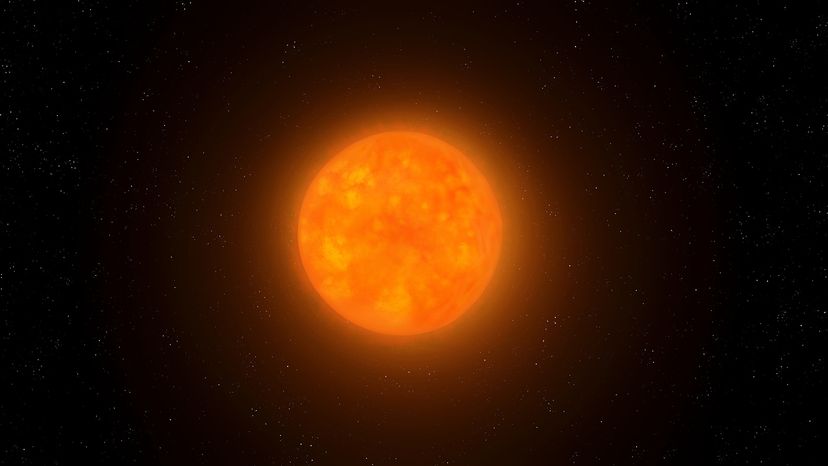
These are among the largest stars in the universe, with the most massive ones reaching up to around 200 to 300 times the Sun’s mass.
Outward radiation pressure from nuclear fusion in the core is balanced against the inward pull of gravity until the star’s fuel is exhausted.
The most massive stars can end their lives as stellar mass black holes. Red supergiant stars like Betelgeuse are bright, giant beacons in the Milky Way.
2. Massive Stars
More massive stars burn through all the fusion reactions faster than their smaller cousins. O-type stars and B-type stars fall in this category, blazing blue with surface temperatures far hotter than a G-type star like the Sun.
When a massive star collapses, it can produce either a neutron star or such an object as a black hole.
3. Main Sequence Stars
Most stars spend the bulk of their lives on the main sequence. Here, inward gravity is perfectly balanced by outward light pressure from nuclear fusion in the core. This is where young stars settle after forming in a giant molecular cloud.
4. Red Giant Stars
When low-mass stars run out of hydrogen in their cores, they swell into red giants. Their outer layers expand while fusion reactions shift outward. This stage can lead to a planetary nebula, leaving behind a white dwarf.
5. White Dwarfs
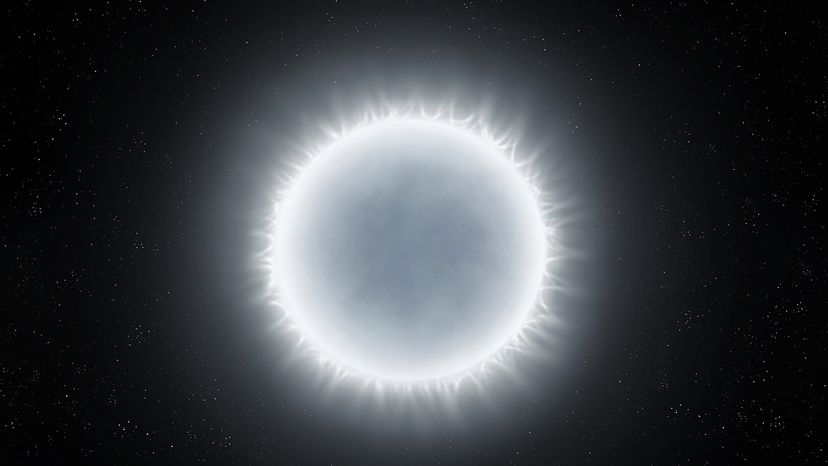
A white dwarf shines even without fusion; it’s the leftover core of a star like the Sun after the outer layers drift into space.
Over billions of years, it cools into a black dwarf, though the universe isn’t old enough for any to exist yet.
6. Neutron Stars
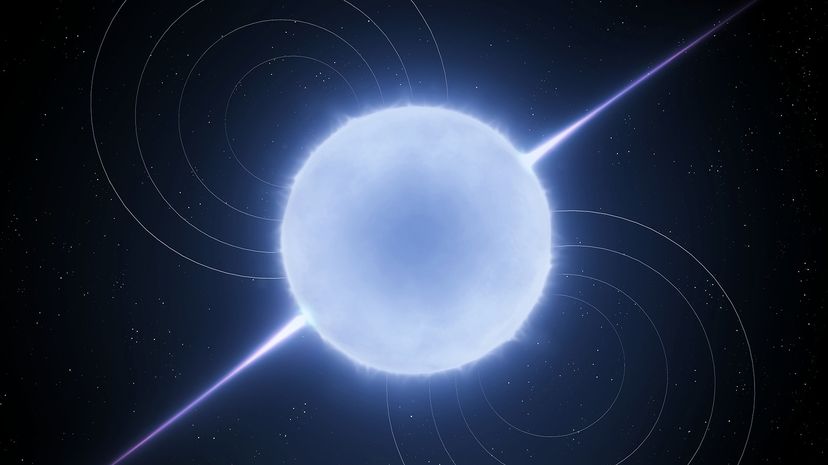
When a massive star’s life ends and it collapses, the inward crush is so intense that a neutron star crushes protons and electrons into neutrons.
These objects pack more mass than the Sun into a sphere just 12.4 miles (20 km) across. In some cases, they’re found in a binary star system with another star.
7. Brown Dwarfs
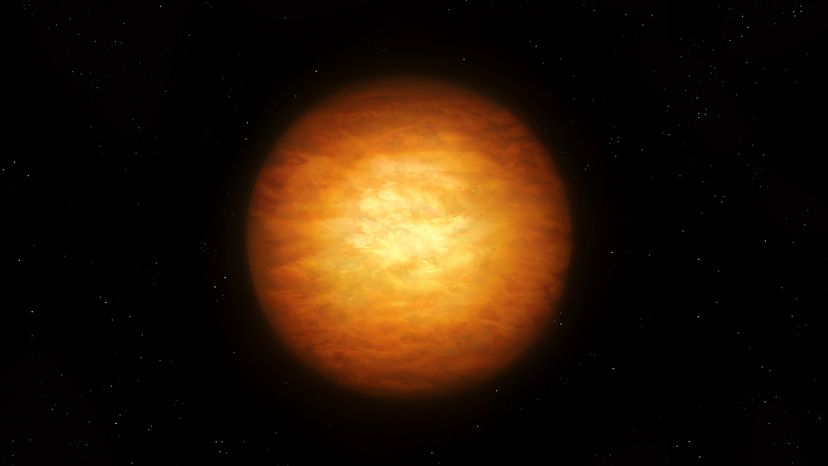
Sometimes called “failed stars,” brown dwarfs have too little mass to start all the fusion reactions of a true star. They can still glow faintly in visible light for millions of years.
8. Pre-Main Sequence Stars
In active star-forming regions, a young star like a T Tauri star hasn’t yet reached the main sequence. It still resembles main sequence stars in appearance but hasn’t begun steady hydrogen fusion.
9. Binary and Double Stars
Many stars form as part of a binary star or double star system, orbiting a common center of mass. These pairings can be stable or lead to dramatic mass transfers between stars.
10. Evolved Stars
This catch-all term covers stars in later life stages—from bright giant stars to red giants and supergiants—after they’ve exhausted core hydrogen. Their paths depend on their original stellar mass, which determines whether they end as white dwarfs, neutron stars or black holes.